Generally Golden Retrievers are a robust healthy breed, but they are predisposed to a number of health conditions. For this reason, when buying a puppy, it is really important to check that the parents have been fully health tested.
Worth mentioning is whilst trying their best to produce healthy puppies, the breeder is also trying to ensure that the puppies have the wonderful temperament that the breed is famous for.
The Royal Kennel Club’s Health Standard consolidates all relevant health tests and gives guidance on which tests to undertake before breeding. The ‘Good Practice’ category highlights the most critical tests as a starting point, and breeders are encouraged to aim for the ‘Best Practice’ level by completing all recommended tests.
Hopefully the following advice simplifies what the health tests and scores mean.
Health Tests Explained


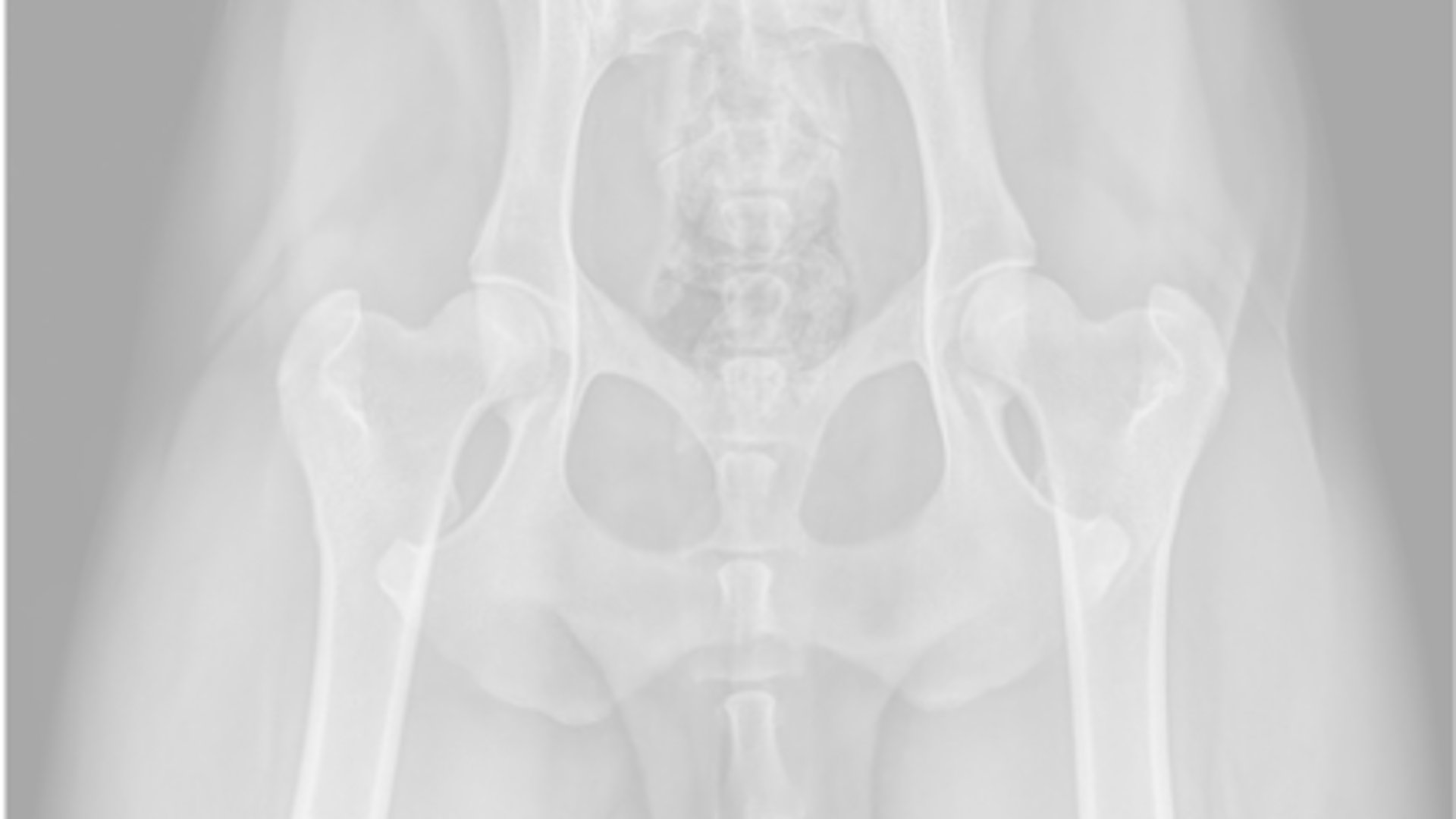
When dogs reach 12 months of age, they can have their hips scored under the BVA/RKC scheme or equivalent.
The hips are x-rayed under sedation and sent away to be analysed by a specialist panel.
Each hip is looked at independently, with nine features being given a score.
The scores are added up and given a number between 0 to 53, with 0 being perfect and 53 badly affected.
This is done for both hips and expressed as, for example 5:6, meaning one hip has a total score of 5 and the other hip has a total score of 6. This is how the scores will be shown on the puppy’s RKC registration documents.
Sometimes the numbers are added together, so in this case it would 11.
AT PRESENT THE SCORE FOR GOLDEN RETRIEVERS IS AROUND 19. WHEN LOOKING FOR A PUPPY BOTH PARENTS SHOULD HAVE A SCORE LOWER THAN THIS. THE LOWER THE NUMBER, THE BETTER.
* See Note Below
Hip Scoring
(RKC ‘Good Practice’ Recommendation)
Elbows can be scored once the dog reaches 12 months of age and it is usual for the elbows to be scored at the same time as the hips. Again, the elbows are x-rayed under sedation and sent away to be analysed by a specialist panel.
With elbows, the scoring is a little different to hips.
Each elbow is examined by the panel and given a score, this time between 0 and 3.
When the numbers are combined, the total score is the highest number given to either of the elbows. So, for example if the score is 1:2, the total score will be 2. This is the number that will be displayed on the RKC registration documents.
WHEN LOOKING FOR A PUPPY THE IDEAL SCORE FOR ELBOWS IS 0 however do read the note What if the Scores aren’t Perfect? below.
* See Note Below
(RKC ‘Good Practice’ Recommendation)
Elbow Scoring

Golden Retrievers are tested for 4 eye conditions and can be examined once they have reached 12 months of age. This has to be done by one of a panel of vets with a special qualification in veterinary ophthalmology. A certificate will be issued and both parents should have current clear certificates.
The tests needed are for:
Hereditary Cataract (HC) - Annual Test (RKC ‘Good Practice’ Recommendation)
Progressive Retinal Atrophy
(PRA1) - Annual Test (RKC ‘Best Practice’ Recommendation)
(PRA2) (RKC ‘Good Practice’ Recommendation)
Multifocal Retinal Dysplasia (MRD) - Annual Test (RKC ‘Good Practice’ Recommendation)
Gonioscopy - Every 3 years (RKC ‘Good Practice’ Recommendation)
Eye Tests

Ichthyosis is a type of skin disease caused by skin cells not working properly. There is a DNA test, however testing is not widely carried out. When tested, dogs are classed as Affected, Carrier or Clear. A dog can be affected without having any clinical signs whatsoever. The first signs usually develop from birth to 18 months, where it looks as though the dog has dandruff. A lot of vets aren’t familiar with the condition and it is often referred to as puppy dandruff.
(RKC ‘Good Practice’ Recommendation)
Ichthyosis


Breeders will sometimes consider breeding from a dog with a less than ideal score, if everything else is good. Remember, whilst we are not saying this is a recommended practice, experienced breeders know their lines, and will know exactly what is behind their dog’s pedigree. For example, they might know that their dog had a bump on its right front leg as a puppy and feel that this has influenced their elbow score. They know that generations back all the dogs have excellent elbows, so they decide to go ahead and have a litter. In cases like this, they will ensure that they use a dog who has a 0 elbow score himself and is known to produce good elbows. This is where you have to put your trust in the breeder, and if you feel you can’t, then this isn’t the litter for you.
Note:
Some breeders are now choosing to send hip and elbow x-rays to Australia. This is perfectly acceptable, but unfortunately at the present time, these results are not being uploaded to the RKC website.